
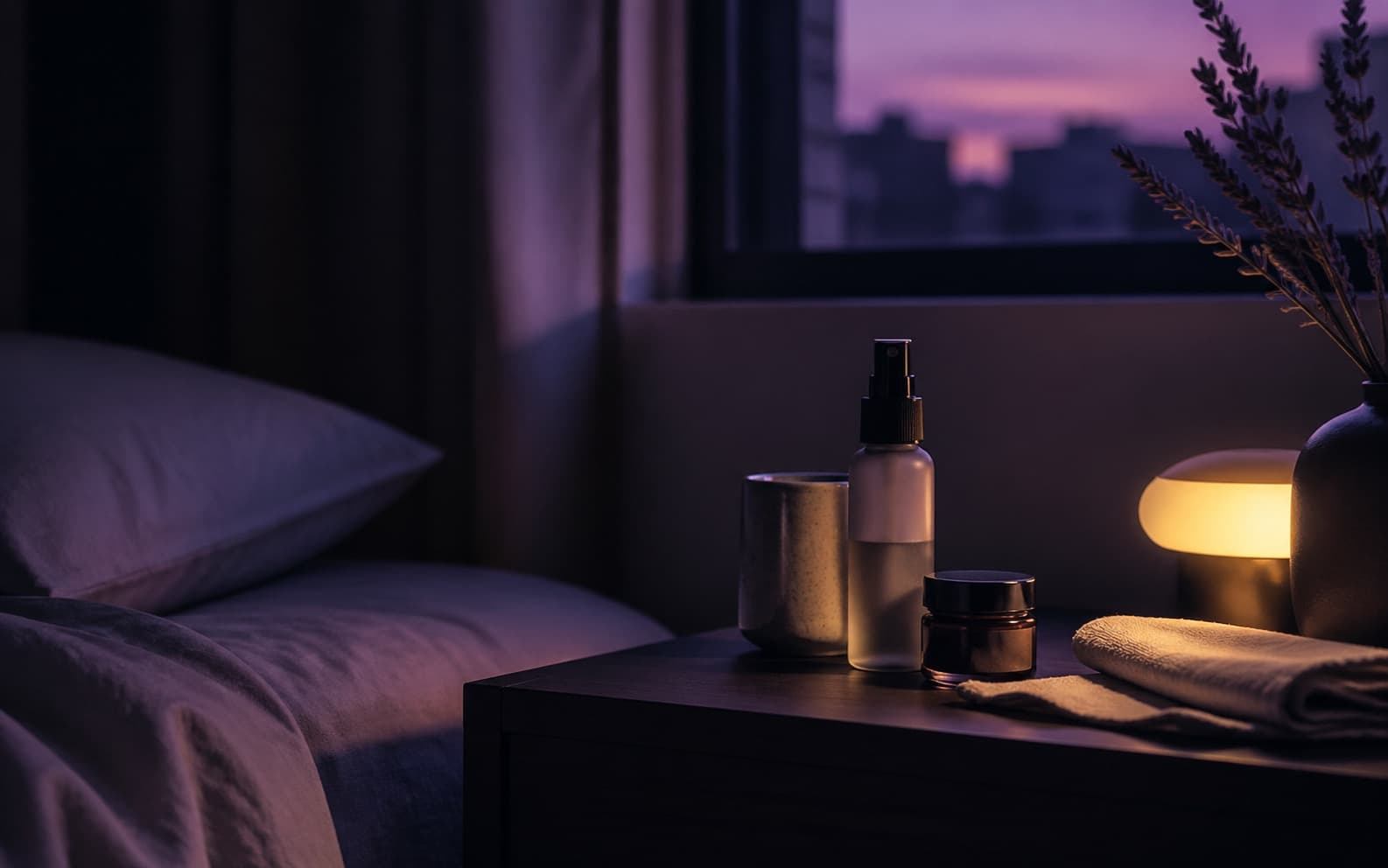
A better night often starts with the room, not the product. If your bedroom still feels like a work zone, laundry zone, scrolling zone, and storage zone, bedtime has to fight too many signals at once.
This checklist keeps the reset simple. The goal is to make the room easier to sleep in tonight, then repeat the same few cues often enough that the space starts to feel settled.
Use it before adding new products to the routine. If the room already supports the wind-down, a pillow spray, balm, book, lamp, or white-noise habit has a clearer role.
Start with the visible friction
Walk into the room and notice what asks for attention first. Laundry on a chair, bright chargers, open tabs on a laptop, bottles on the nightstand, or clutter on the floor can all make the room feel unfinished.
Clear only the parts that affect bedtime. You do not need a full deep clean. You need enough visual calm that the bed feels like the obvious next place to go.
- Clear the top of the nightstand except for the objects you use at night.
- Move work devices away from the bed if possible.
- Put laundry in one closed basket instead of spreading it across the room.
- Leave water, tissues, and any evening cue where you can reach them without searching.
Lower the room's brightness
Light is one of the strongest signals in a bedroom. A room can be tidy and still feel alert if overhead lights, screens, and device LEDs stay bright until the last minute.
Choose one softer light source for the final part of the evening. A bedside lamp, warmer bulb, or dimmer can make the room feel more clearly separated from daytime tasks.
Set a screen boundary before the final cue
The final cue only works if it stays final. If you spray the pillow, apply balm, open a book, or turn down the lamp and then return to messages, the room gets mixed instructions.
Move the phone before the last step. Charge it away from the pillow, turn the screen face down, or choose a specific point when the bedroom stops being a feed.
- Pick the boundary before you are tired.
- Keep the charger somewhere that does not pull your hand back to the screen.
- Use a real alarm clock if phone alarms keep the phone beside your face.
Choose one repeatable closing cue
A closing cue can be scent, sound, light, touch, or a small object. The cue matters less than the repetition. It should be simple enough to do on a normal night.
Examples include switching to one lamp, reading two pages, playing the same quiet sound, misting the pillow lightly, applying a balm, or placing tomorrow's clothes in one spot.
Do not stack too many cues at once. One clear action repeated for two weeks is more useful than a long routine you abandon after three nights.
FAQ
Do I need to fully clean the bedroom before sleep?
No. A useful reset focuses on the areas that affect bedtime: the nightstand, bed surface, lighting, phone placement, and anything visually distracting.
What is the best closing cue?
The best closing cue is the one you can repeat. It may be a lamp, book, scent, sound, or a short preparation step for tomorrow.
Should I buy a sleep product first?
Start with the room. Optional products work better when the bedroom already supports the wind-down.